A brand campaign that reaches one hotel a week late is not a campaign. It is a collection of exceptions, workarounds, and missed revenue opportunities. A well-run multi-property content rollout gives every property the same ability to promote seasonal offers, explain services, support arriving guests, and protect brand standards – without asking local teams to manage files, devices, or server updates.
For hotel groups, the in-room TV is one of the few digital channels that reaches guests when they are on property, in private, and ready to make a decision. The challenge is not creating content. It is getting approved content live across hundreds or thousands of screens with the right local details, at the right time.
Why Multi-Property Content Rollouts Break Down
Most rollout problems begin with a system built for a single property. A local server may work when one IT team manages one hotel, one channel lineup, and one set of promotions. It becomes difficult when corporate marketing needs to launch a campaign across 20 properties while each location has different dining hours, amenities, spa offers, local attractions, and guest services.
The result is familiar: a generic corporate screen replaces useful local information, or local teams create their own versions that drift away from the brand. Updates are sent by email, loaded manually, scheduled inconsistently, and sometimes left on screens long after an offer expires. The larger the portfolio, the more those small failures become visible to guests.
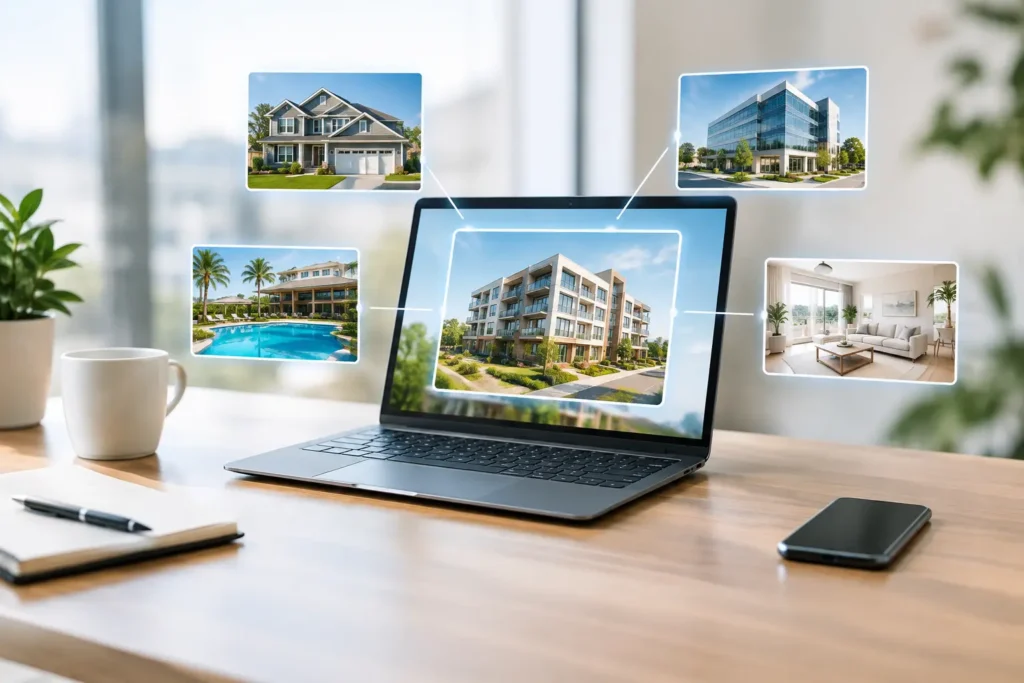
A cloud-managed TV platform changes the operating model. Instead of treating every hotel as a separate television project, teams can manage shared content, property-specific information, and screen-level rules from one browser-based control point. No on-premise TV server is required for content changes, and no technician needs to visit a property simply to replace a banner or update a welcome message.
Build the Rollout Around Content Layers
The fastest way to create consistency without losing local relevance is to organize content into layers. Corporate content establishes what must look and feel the same. Regional content addresses market-level needs. Property content gives each hotel room to communicate what is actually available on site.
For example, a hotel group may set a standard launcher design, brand colors, emergency information format, casting instructions, and loyalty messaging across every property. A regional team may promote a local event package or seasonal campaign. Each hotel can then add its restaurant hours, room service menu, pool availability, meeting offers, and area recommendations.
This approach prevents a common mistake: treating every screen as either entirely centralized or entirely local. Neither extreme works well. Too much central control makes the TV experience less useful for guests. Too much local control creates inconsistent presentation, outdated information, and unnecessary approval cycles.
Define what is locked and what is flexible
Before publishing anything, decide who owns each type of content. Brand standards, approved templates, legal notices, and enterprise campaigns usually belong to the central team. Property teams should own operational details that change frequently, such as dining hours, amenity notices, local promotions, and event messaging.
The goal is not to make every manager a TV administrator. It is to give the right people control over the information they already manage, within clear brand and approval boundaries.
Use templates that protect the guest experience
A template is more than a visual shortcut. It protects readability, spacing, image quality, and call-to-action placement across many types of TV displays. It also keeps teams from turning the guest interface into a crowded digital noticeboard.
Create a small set of approved layouts for promotions, service alerts, welcome screens, and informational pages. Property teams can change the image, copy, price, or hours while the core structure remains consistent. That makes a campaign easier to launch and much easier to audit.
A Practical Multi-Property Content Rollout Plan
A strong rollout is phased, but it should not be slow. With centralized cloud management, a group can prepare the framework once, validate it with a pilot group, and then expand quickly without repeating the same technical work at every hotel.
- Audit the portfolio before designing the campaign. Identify screen types, room counts, property brands, local service differences, languages, and any existing TV infrastructure that affects the plan. This prevents a corporate campaign from reaching a property with details that do not apply.
- Create a master content library. Build approved brand assets, reusable tiles, templates, notices, and campaign modules in one location. Name assets clearly and include expiration dates for time-sensitive content. A library that cannot be searched or understood by another team member will create delays later.
- Pilot with different property profiles. Select a limited-service hotel, a full-service property, and a location with active food and beverage or spa operations. The pilot should test both technical delivery and operational ownership. It is where teams discover whether a promotion needs local pricing, whether staff can update their service pages, and whether the guest journey is clear on the TV.
- Launch by groups, not by one property at a time. Roll out by brand, region, property type, or readiness level. Use the same core package for each group, then apply local variations before publishing. This approach keeps momentum high while giving the implementation team a manageable path to resolve exceptions.
- Measure what stays current. Track more than deployment completion. Review expired promotions, properties with missing local information, campaign exposure, and the time required to publish an update. These operational metrics show whether the process is working after launch day.
Central Control Should Not Mean Generic Screens
Guests do not care whether content came from corporate or a local manager. They care whether it helps them. A screen that promotes breakfast at a restaurant closed for renovation is worse than no promotion at all. It damages trust and makes the hotel appear poorly coordinated.
That is why property-level targeting matters. A central team should be able to distribute a campaign to all hotels, a specific brand, a region, a selected group of properties, or even a set of rooms. A property team should be able to add local content without editing the entire enterprise experience.
Timing is equally important. Seasonal packages, holiday menus, conference messaging, weather notices, and room service promotions need start and end dates. Scheduled publishing reduces the risk of staff forgetting a change after a busy weekend. It also gives marketing teams confidence that an approved campaign will appear when it is meant to appear.
Compare the Operating Models
| Requirement | Server-Based Property TV | Cloud-Managed TV Platform | |—|—|—| | Publish a group-wide campaign | Often requires separate property coordination | Publish centrally with property targeting | | Update local service details | Dependent on local access and technical support | Authorized teams update through a browser | | Maintain brand consistency | Varies by property configuration | Shared templates and content rules | | Scale to new properties | Hardware and setup can slow expansion | Reuse the same content structure and settings | | Respond to an urgent notice | May require on-site or remote server access | Update centrally and publish quickly |
There are trade-offs. A highly centralized model requires clear governance, especially when multiple brands or franchise operators are involved. A property with limited local staff may need more support during onboarding. And content quality still depends on the people creating it. Cloud delivery removes the infrastructure barrier, but it does not replace a sound content process.
Turn the TV Into a Commercial Channel
The best rollout plans do not stop at brand compliance. They treat the TV as an active guest-engagement and revenue channel. Once a hotel can publish reliably across its portfolio, it can promote services when guests are most likely to use them.
A breakfast offer can appear the night before. A late checkout message can reach guests on departure morning. A spa promotion can target rooms during a quieter afternoon. A meeting venue can promote on-property dining to event attendees. These are not intrusive ads when the content is relevant, current, and easy to act on.
For properties using PMS-connected experiences, personalization can add another layer of value. Welcome messages, guest names, stay information, and service prompts can make the TV feel connected to the rest of the property experience. Secure guest casting should remain simple to start and simple to clear at checkout, protecting the guest while reducing front-desk support calls.
Viggo Smart TV supports this model by giving hotel teams centralized control over branded TV experiences, local content, promotions, and property information without adding a server at each location.
Make Ownership Visible After Launch
The rollout is not finished when screens turn on. It is finished when content ownership becomes routine. Assign a central content owner for brand standards and campaigns, plus a named owner at each property for local accuracy. Set a regular review cadence for promotions, menus, hours, and seasonal messaging.
Keep the process simple enough that it survives staff changes. If updating a dining offer requires three departments and a technical ticket, the offer will eventually become stale. If a trained manager can make an approved change in minutes, the TV remains useful.
The real advantage of a multi-property content rollout is not just faster publishing. It is the ability to make every room feel connected to the same brand while still giving each hotel a reason to be chosen, used, and remembered.